
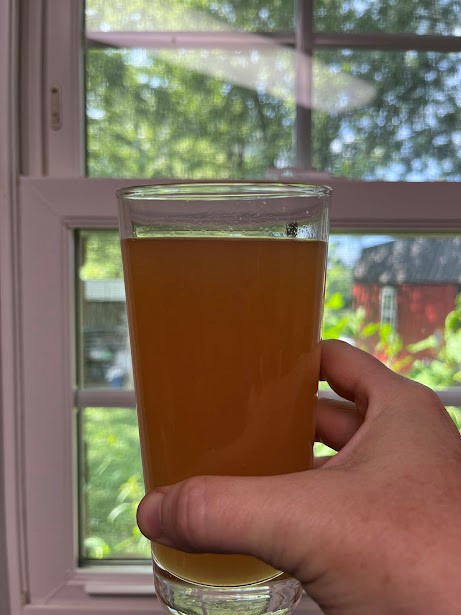
A little creativity can turn something you’d normally throw away into something delicious!
Fruit Scrap Kvass: Turning Kitchen Scraps Into Something Delicious
I have a confession to make: I don’t eat peach peels. I absolutely LOVE peaches, but I cannot and will not tolerate that fuzzy outside texture.
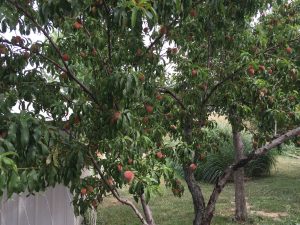
Since the lone peach tree at our farm is incredibly unpredictable, when our friends from Dunn & Bowen Orchard set up at the farmers market, we often come home with a big box of their delicious peaches.
And then those peaches get peeled!!
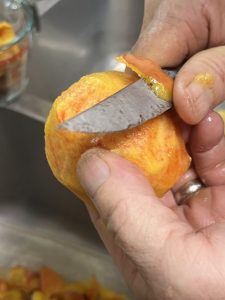
Which brings me to an interesting question: What do you do with all those fruit scraps?
Finding Ways to Reduce Food Waste
One of the things I’ve learned over the years is that reducing food waste doesn’t necessarily mean making big changes. Sometimes it’s simply about finding another use for something you would normally toss in the trash.
In our kitchen, vegetable scraps have a designated home. I keep a bag in the freezer where I collect vegetable peels, ends, and other odds and ends until I’m ready to make homemade vegetable stock.
Making stock is incredibly easy, and it creates such a delicious, flavorful base for soups, sauces, and all kinds of dishes. It’s one of my favorite ways to get a little more use out of the vegetables we buy.
But fruit scraps? That’s been a different story.
What Can You Do With Leftover Fruit Peels and Scraps?
I’ve seen plenty of suggestions for using leftover fruit scraps. You can make fruit scrap jelly, dehydrate peels for homemade tea, or even use certain fruit scraps in homemade vinegar.
All of those sound like wonderful ways to reduce food waste, but this year I discovered something even more fun to try.
Fruit Scrap Kvass!
Yep! I had no idea what kvass was, either!
A few months ago, I stumbled across an awesome website called Zero Waste Chef. They shared a recipe for making a lightly fermented, bubbly drink using fruit scraps, water, and sugar.
Basically, instead of throwing away those leftover fruit peels and bits, you can turn them into a naturally fermented fruit drink.
I was intrigued. And since I had a rather large collection of peach peels, I decided peaches would be my first experiment!
Making Homemade Peach Scrap Kvass
I started by measuring out approximately one cup of peach scraps.
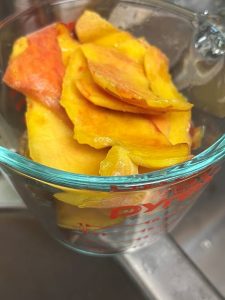
I used peach skins and pits in my original experiment, although you can make this with peach skins and leftover bits of fruit, too.
For my first batch, I used a regular quart Mason jar. Nothing fancy required!
I added two cups of water and two tablespoons of sugar. I actually heated the water first to help dissolve the sugar, then let it cool before adding the fruit scraps.
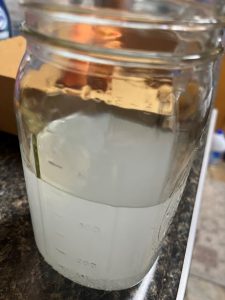
Once the water was ready, I added my peach scraps, gave everything a gentle swirl, and covered the jar.
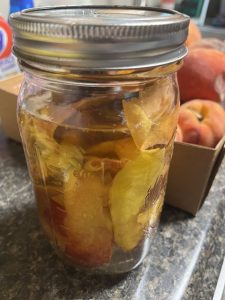
Over the next couple of days, I checked on it and gently swirled the mixture. Fermentation creates carbon dioxide, so it’s important to use a fermentation-safe cover or a loosely fitted lid rather than tightly sealing a jar.
Since I had absolutely no idea how strong the flavor would become, I decided to check my first batch at 48 hours.
I strained out the fruit solids using a colander and poured the liquid into a glass.
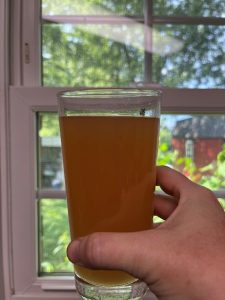
The verdict?!
I thought it was DELICIOUS!
It was slightly tangy, not overly sweet, and had just a hint of carbonation.
I was pretty excited that my first experiment turned out so well!
Experimenting With Different Fruit Scraps
Once I realized how easy and tasty peach kvass could be, I started looking at other fruit scraps a little differently.
Instead of automatically tossing them into the compost bin or the chicken treat bucket, I began saving some of the leftovers to see what else I could turn into kvass.
So far, I’ve experimented with:
-
Peaches: My first batch and the one that started this whole adventure!
-
Cherries: I used the pits after removing the fruit, with a little bit of flesh still clinging to them.
-
Plums: Hands down, my favorite! The flavor was amazing.
I love that something as simple as saving fruit scraps can turn into such a fun kitchen experiment.
It’s a good reminder that reducing food waste doesn’t have to be complicated. Sometimes it just takes a little curiosity and a willingness to try something new!
Easy Homemade Peach Scrap Kvass Recipe
Inspired by the recipe from Zero Waste Chef, this is a simple way to experiment with using leftover fruit scraps.
Ingredients
-
1 cup peach scraps (peach skins and leftover fruit)
-
2 tablespoons sugar
-
2 cups water
Instructions
-
Wash your peaches before peeling and save the clean skins and fruit scraps.
-
In a clean quart Mason jar, combine the water and sugar. Stir until the sugar dissolves. If you warm the water to dissolve the sugar, allow it to cool completely before adding the fruit.
-
Add the peach scraps and gently swirl the jar to combine.
-
Cover with a fermentation-safe lid or a loosely fitted lid that allows gas to escape.
-
Leave at room temperature and gently swirl the mixture once or twice daily.
-
After 2–5 days, check the flavor and signs of fermentation. When it has a pleasantly tangy flavor and some fizz, strain out the solids.
-
Refrigerate the finished kvass and enjoy chilled.
A Few Fermentation Notes: Use clean equipment and sound, fresh fruit. Do not use cracked peach pits or exposed kernels. Fermentation times vary with room temperature and fruit. If you see mold, or notice a rotten or otherwise unpleasant smell, discard the batch. Never tightly seal an actively fermenting jar, as pressure can build up. Homemade fermentation isn’t an exact science, so use good food-safety practices.
You can experiment with other fruit scraps, too. Cherries, plums, berries, and melon are all interesting possibilities!
More Ways to Reduce Food Waste at Home
My little fruit kvass experiment got me thinking about all the other ways we can make better use of the food we bring home.
Here are a few easy ideas:
-
Save vegetable scraps for stock. Keep a freezer bag for clean vegetable ends, peels, and trimmings.
-
Use fruit peels for homemade tea. Dry suitable fruit peels and use them to make flavorful infusions.
-
Make fruit scrap jelly. Some fruit peels and cores can be used to create delicious homemade jellies.
-
Use up overripe fruit. Add it to smoothies, baked goods, sauces, or homemade fruit spreads.
-
Get creative with leftovers. Sometimes yesterday’s dinner ingredients make a wonderful addition to today’s lunch.
The biggest takeaway? Before tossing something into the trash, consider whether it might have another use.
A Little Less Waste, A Little More Creativity
Living and working on a farm makes you appreciate how much effort goes into producing food. From planting and growing to harvesting and getting it to market, there’s a whole lot of work behind the food we eat.
That’s one reason I enjoy finding little ways to make better use of what we have.
As for our very unpredictable peach tree? We will continue to look forward to that ONE harvest day per year that we sometimes get!
S&B Bell Farms is a participant in the Amazon Services LLC Associates Program, an affiliate advertising program designed to provide a means for sites to earn advertising fees by advertising and linking to www.amazon.com