Have you ever wondered what happens to the materials left behind after animals gets sheared or shed their coats?
For most people, it doesn’t get much thought.
But what if I told you that these ignored fibers – alpaca “thirds” and Katahdin sheep hair – could be the secret to healthier gardens, richer soil and a more sustainable planet?
Every bit, every thread, is a chance to return the favor-to the land, to your garden, to the animals themselves.
It’s science-informed, planet-friendly and steeped in reverence for the natural world. If you want to make your gardening efforts more meaningful, while shrinking your environmental footprint, this is the way to go.
Now, let’s see how alpaca thirds, and sheep hair, can revitalize your soil – and why this matters so much.
Understanding the Materials
What Are Alpaca “Thirds”?
Alpacas are amazing animals. They are shorn each year for their soft and luxurious fleece.
The three qualities of fiber produced through it can have different characteristics, and each may be used for various types of applications. The best fibers originate from the animal’s back and sides. These are valued for their softness and warmth and are often spun into luxury textiles such as sweaters and scarves.
But what about the rest of that fleece? That’s where the “thirds” come in.
- Where do they originate? Thirds are the long coarse fibers around the neck, belly, and legs of an alpaca.
- Why are they different? These fibers are shorter, coarser, and less uniform than high-quality fleece. Consequently, they’re not fit for most textile uses.
- How much is produced? One alpaca produces 2–10 pounds (0.9–4.5 kg) of fleece per year. As much as half of this can be a third.
For years, these fibers were considered byproducts – waste material headed to compost piles or just thrown out.

Meet the Katahdin Sheep
Now let’s turn our attention to another very awesome animal: the Katahdin sheep.
Katahdins are a breed of hair sheep, as opposed to traditional wool sheep. That means they grow hair rather than wool, which they shed naturally every spring.
- What happens during shedding? Our Katahdin sheep shed their heavy winter coats as temperatures rise. This process results in a few pounds of coarse hair per animal left behind.
- Why is this significant? Until now this shed hair had no value.


Why Use Animal Fibers and Hair in the Garden?
If you’re wondering why anyone could want to use animal fibers in the garden, the answer lies in their unique properties.
Before:

After:
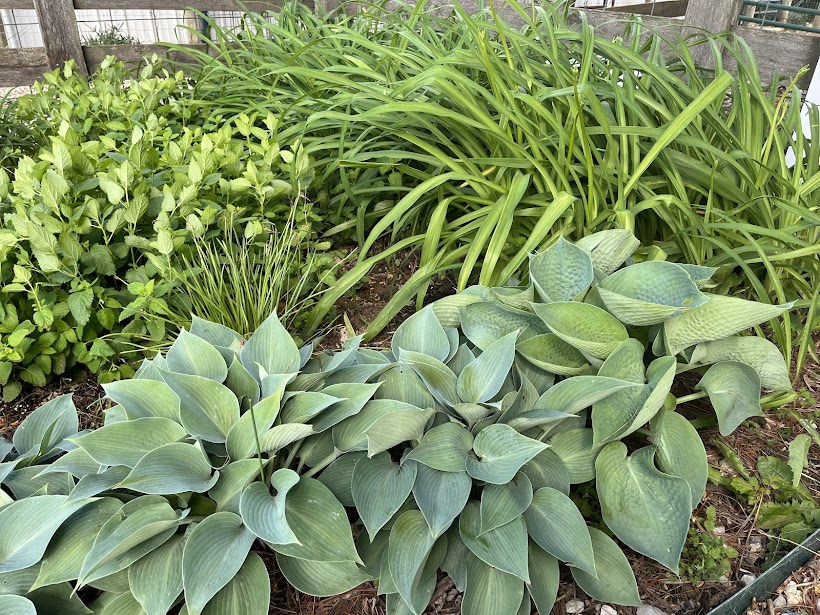
These materials aren’t simply filler – they provide proven, research-backed benefits. Let’s break it down.
Nutrient Content and Soil Benefits
Alpaca thirds (and sheep hair of similar characteristics) have one of the best nutrient profiles for this application. Plants need specific elements to grow, and these fibers are full of them.
Nitrogen
Among these nutrients, nitrogen is needed for plant growth. It is essential for photosynthesis, leaf growth, and health. Alpaca manure and sheep hair, both high in nitrogen.
- Alpaca Manure: Alpaca poop is rich in nitrogen & potassium. They can be scattered directly on plants without risk of burning them, which is a problem with other manures. Although the organic matter content is lower than cow or horse manure, alpaca manure still helps to improve the soil texture and water retention.
- Sheep/Alpaca Hair: These fibers contain approximately 14% nitrogen by weight. This makes them particularly valuable as a slow-release fertilizer.
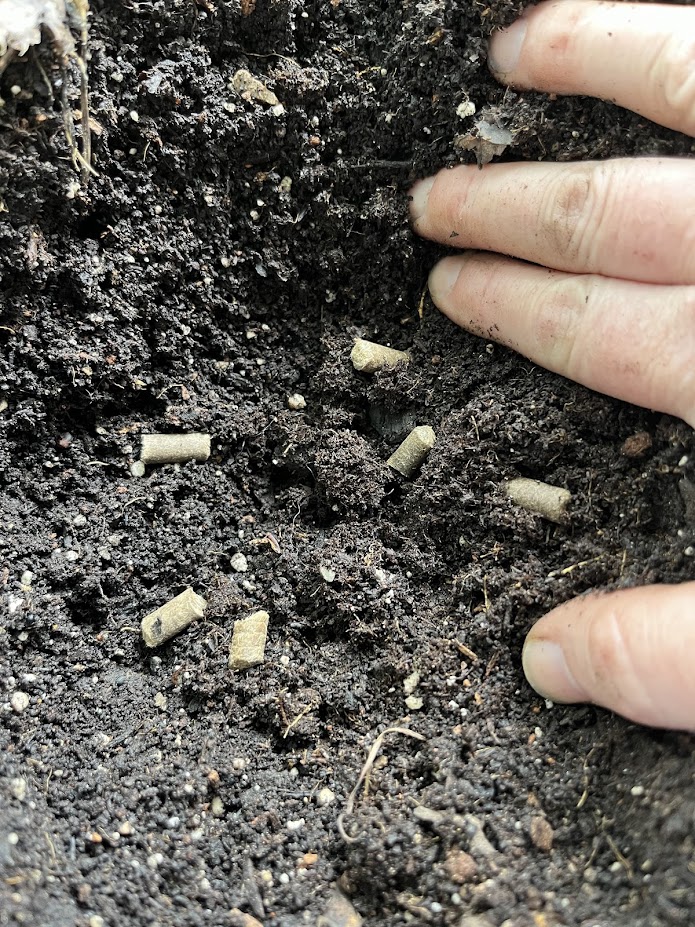
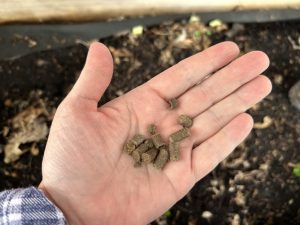
Wool Pellets
Wool pellets are a notch up from that. Sheep hair is a high-nutrient food when processed. Laboratory analysis shows wool pellets have levels of Nitrogen, Carbon, and Potassium Oxide (K2O) similar to commercial organic fertilizers.
Soil Structure
Animal fibers have another big advantage in helping to maintain water retention and structure of soil. These properties are crucial in areas where drought is common, or irrigation is scarce.
Water Retention
Both wool and hair have excellent water-holding abilities. When incorporated into soil, they act like sponges, soaking up moisture and releasing it gradually over time. Less frequent watering is required, providing a steadier state of hydration for plants.
Aeration
As these fibers break down, they form tiny air pockets in the soil. These holes/air pockets enable oxidation of the soil, allowing oxygen to reach plant roots for weed-free, healthy root development, eliminating compaction. Moreover, better aeration prevents erosion, which is vital for long-term soil health.
Slow Decomposition
Wool and hair decompose much more slowly than many other organic materials because of their high keratin content. Its slower decomposition guarantees a sustained release of nutrients, which is advantageous for plants during the growing period.
Microbial Activity
Healthy soil depends on a community of microorganisms. These microscopic organisms decompose organic material, releasing nutrients that can be used by plants. Amendments of wool and hair help this process by serving as a food source for beneficial microbes. This enriches the quality and productivity of the soil over time.
Sustainability and Environmental Impact
The act of using up surplus animal fibers isn’t only good for your garden; it’s good for the planet too. Here’s what makes this approach so powerful.
Circular Economy
Using reclaimed material minimizes the demand for landfills, and we’re learning to make use of alpaca thirds and sheep hair rather than throwing them away.
Biodegradability
Unlike synthetic fertilizers, which can leave toxic residues in the soil, wool and hair amendments are entirely biodegradable. They decompose naturally and return nutrients to the earth without adding toxins.
Carbon Sequestration
Maintaining these fibers in the agricultural system effectively sequesters carbon. Methane, a potent greenhouse gas, is released when waste products decompose in landfills. Diverting them to gardens and compost piles means less emissions and a better climate.
Practical Application
Now that you know the science and sustainability of these materials, let’s have a look about how to use them in your own garden.
In the Garden
So how do you work alpaca thirds and sheep hair into your gardening routine?
- Mix into Soil: Stir pellets or loose fibers into potting soil for slow-release nutrition.
- Use as Mulch: Stir them into the soil to keep moisture in, weeds down and pests away.
- Booster Compost: Add them to your compost heap to balance nitrogen and carbon, accelerating decomposition.
Final Thoughts
We believe every part of our animals deserves to be honored. Nothing goes to waste, from their fleece to their droppings. This way of thinking informs all parts of our work, from building our products to educating our customers.
That’s because our commitment to sustainability goes beyond business – it’s about responsibility.
We’re showing that regenerative agriculture can be a thing, by turning alpaca thirds and our sheep hair into valuable garden amendments. And we are doing it with science and passion and a profound respect for the Earth.
Join the movement!
FAQs
How Do Alpaca Thirds and Sheep Hair Affect Soil Microbes?
Animal fibers such as alpaca thirds and sheep hair are high in keratin, a protein that degrades slowly, feeding beneficial soil microbes over time. These microbes help to decompose organic matter and release nutrients for plants. These fibers, in turn, promote microbial activity, which leads to healthier, more resilient soil ecosystems.
Can I Use These Fibers in Raised Beds or Containers?
Yes, alpaca thirds and sheep hair are also well used in raised beds and container gardens. When added to potting soil, they serve as slow-release fertilizer, offering nutrients slowly as they decompose. They also enhance water retention and aeration, which is particularly useful in containers, where soil dries out more rapidly.
Are There Any Pest-Repelling Benefits to Using These Materials?
Absolutely! Naturally pest-repellent materials such as wool (including sheep hair) The rough texture and slow breakdown of these fibers also discourage certain pests like slugs and snails from infiltrating your garden. Moreover, the high nitrogen content acts as a deterrent, bolstering the defenses of plants against the predominant nuisances in the garden pest realm.
What Is the Carbon-to-Nitrogen Ratio of Alpaca Thirds and Sheep Hair?
Animal fibers such as alpaca thirds and sheep hair have a considerable C:N ratio because of their keratin content. For example, wool pellets have a C:N ratio of about 35:1 similar to great composting ratio.
This ratio ensures that it breaks down quickly when mixed with other organic matter, like food waste or leaves.
Can These Fibers Be Used in No-Till Gardening?
Yes, these fibers are great within no-till gardening systems. You can apply them straight onto the top of the soil as mulch, or incorporate them into layers of mulch you already have in place.
They gradually decompose and add nutrients to the soil without disrupting its structure. This approach supports soil health and reduces erosion, making it a natural match with the tenets of no-till gardening.
How Does Using These Materials Help Reduce Farm Waste?
Transforming alpaca thirds and sheep hair into high-quality product allows us to keep tons of agricultural waste out of landfills.
These materials were once seen as refuse, but they are being turned into valuable compost for gardening and agriculture. Such a transition not only minimizes farm waste but also encourages a circular economy, in which the animal is honored and every inch is put to use.
Can These Fibers Be Combined With Other Organic Amendments?
Definitely! Alpaca thirds, sheep hair, etc., can be mixed with or mixed in with other organic amendments such as compost, leaf mold, or straw to build a nutrient-rich concoction for your garden.
Combining these substances creates a balanced carbon-to-nitrogen ratio and supports general soil fertility. When combined with high-carbon materials such as wood chips, however, wool pellets provide an optimal environment for microbial activity.
S&B Bell Farms is a participant in the Amazon Services LLC Associates Program, an affiliate advertising program designed to provide a means for sites to earn advertising fees by advertising and linking to www.amazon.com